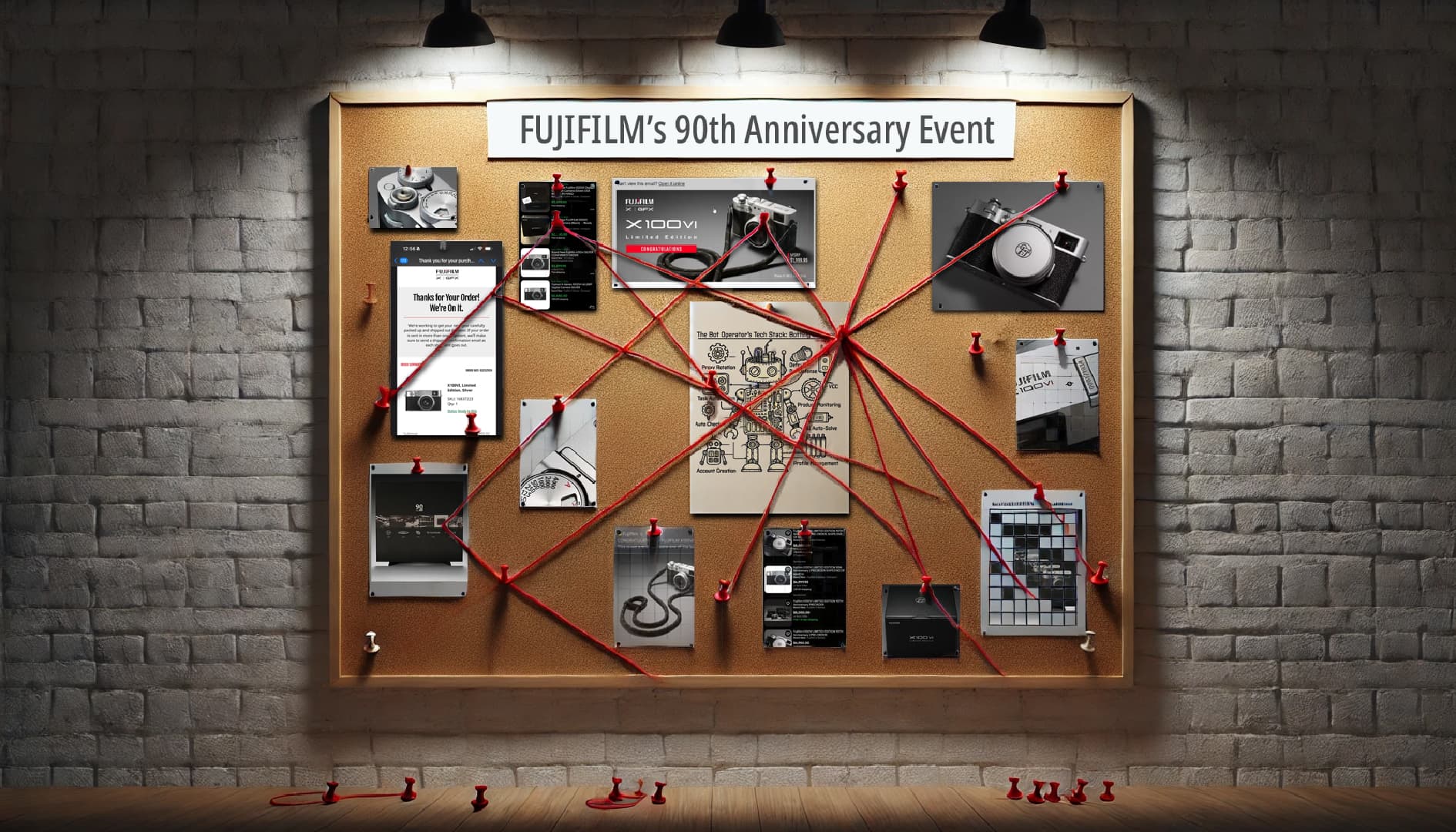
From the outside, FujiFilm seems to be doing everything right. As a maker of world-renowned optical lenses and cameras since 1934, they’ve weathered the digital revolution by staying true to their core principle: #ValuefromInnovation. With a passionate fanbase that values craftsmanship and expects exceptional service, FujiFilm has built a brand many would assume is impervious to the challenges other direct-to-consumer companies face.
However, even the most prepared brands can stumble against increasingly sophisticated threats. Earlier this year, FujiFilm launched a special campaign to celebrate its 90th anniversary: the highly anticipated X100VI, with 1,934 limited-edition numbered units commemorating the company’s founding year. Of these, 900 units were set to release in batches of 300 over three days on the FujiFilm retail site, with the rest available through brick-and-mortar partners.
The launch generated immense excitement among FujiFilm’s loyal fans. Unfortunately, it also drew the attention of retail bot operators. When the first batch went live, bots swarmed the site, securing most of the inventory in seconds and leaving genuine customers empty-handed and frustrated.
Why it matters
FujiFilm, like many brands, aimed to provide a fair and engaging experience for their community. But the absence of a defense-in-depth strategy meant the company relied on what could be described as a flat defense — a single-layer approach without the layered protections needed to counter modern automated threats.
Retail bot developers quickly capitalized, deploying modules that enabled thousands of automated checkout attempts. These bots exploited multiple OWASP Automated Threats, including OAT-021 (Denial of Inventory), OAT-015 (Denial of Service), OAT-006 (Expediting), and OAT-005 (Scalping). The result: genuine customers were locked out of the event, sparking frustration and backlash.
A single defense: monitoring customer feedback
Despite the lack of technical safeguards, FujiFilm’s swift and decisive response highlights an often-overlooked layer of defense: listening to the customer community. When reports of bot success surfaced and fans voiced their disappointment online, FujiFilm acted. They halted the event, canceled all existing orders, and communicated directly with customers, assuring them that steps were being taken to rectify the situation.
Customer Experience Security: beyond the tools
While many companies rely heavily on sophisticated vendor tools to prevent such incidents, FujiFilm demonstrated that action rooted in a strong Customer Experience Security ethos can make a significant difference. By prioritizing transparency, acknowledging the problem, and taking swift corrective measures, they upheld their brand integrity and reassured loyal customers. As commendable as their response was, the lack of a multi-layered defense was a missed opportunity — a more robust, defense-in-depth approach could have mitigated the risk from the start.
Bottom line
FujiFilm’s handling of the initial drop underscores the importance of balancing user experience with security. While the launch exposed vulnerabilities, the company’s quick action demonstrated a dedication to fairness and customer trust — qualities that resonate deeply with their community. But as with any battle, the story doesn’t end here. Bot operators were ready for FujiFilm’s next move: a pivot to an online raffle system designed to give everyone a fair shot at the coveted X100VI. To be continued.